



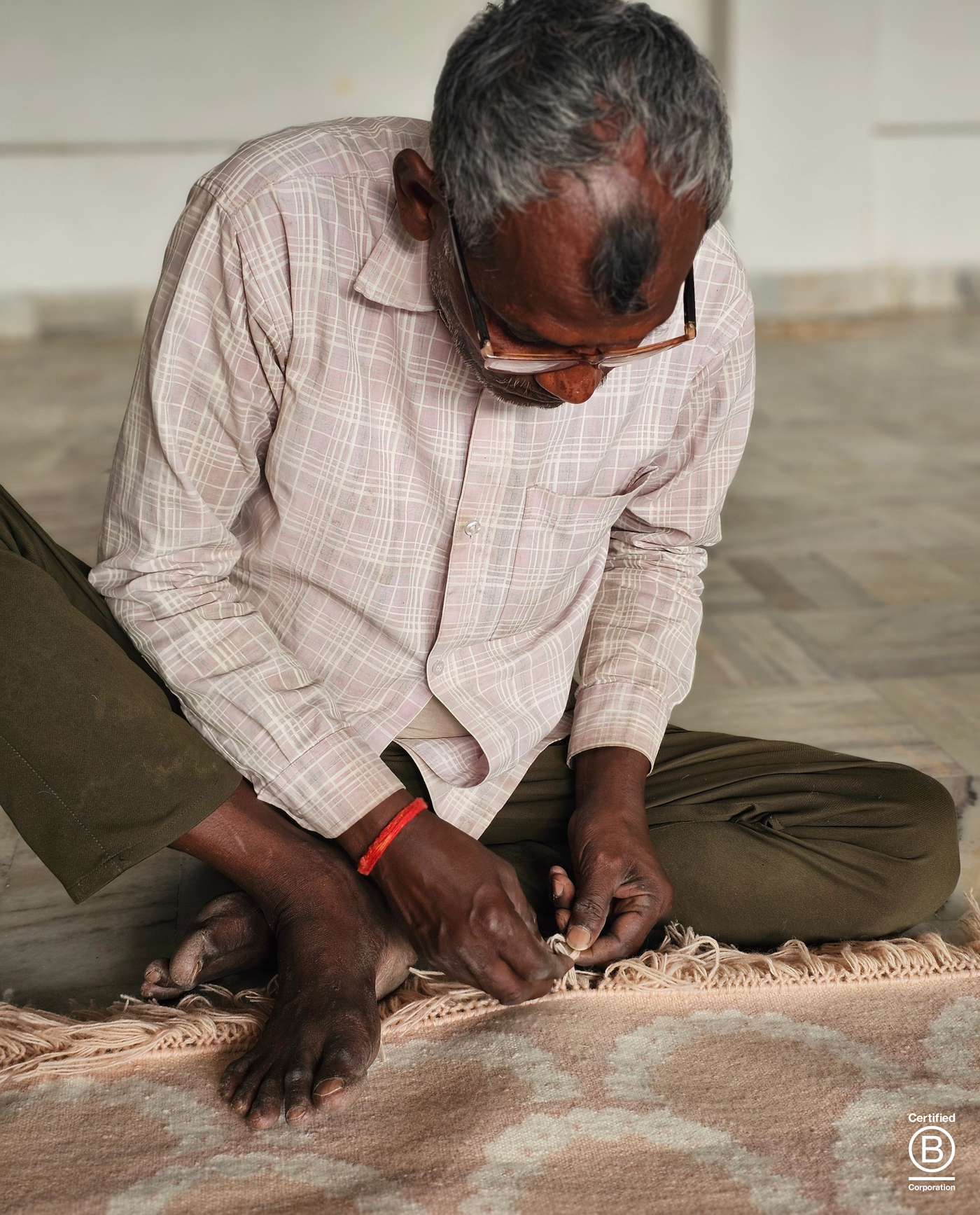
craftsmanship at its finest
The art of handcrafted rugs
Crafted using centuries-old techniques, each rug is shaped by generations of regional weaving traditions. From hand-knotting and flatweaving to handloom work, every technique is carried out with patience and precision, creating pieces with lasting character, durability and a distinctive sense of place. The result is a rug that celebrates the beauty of making, where subtle variations and the hand of the maker give each piece its own unique character.

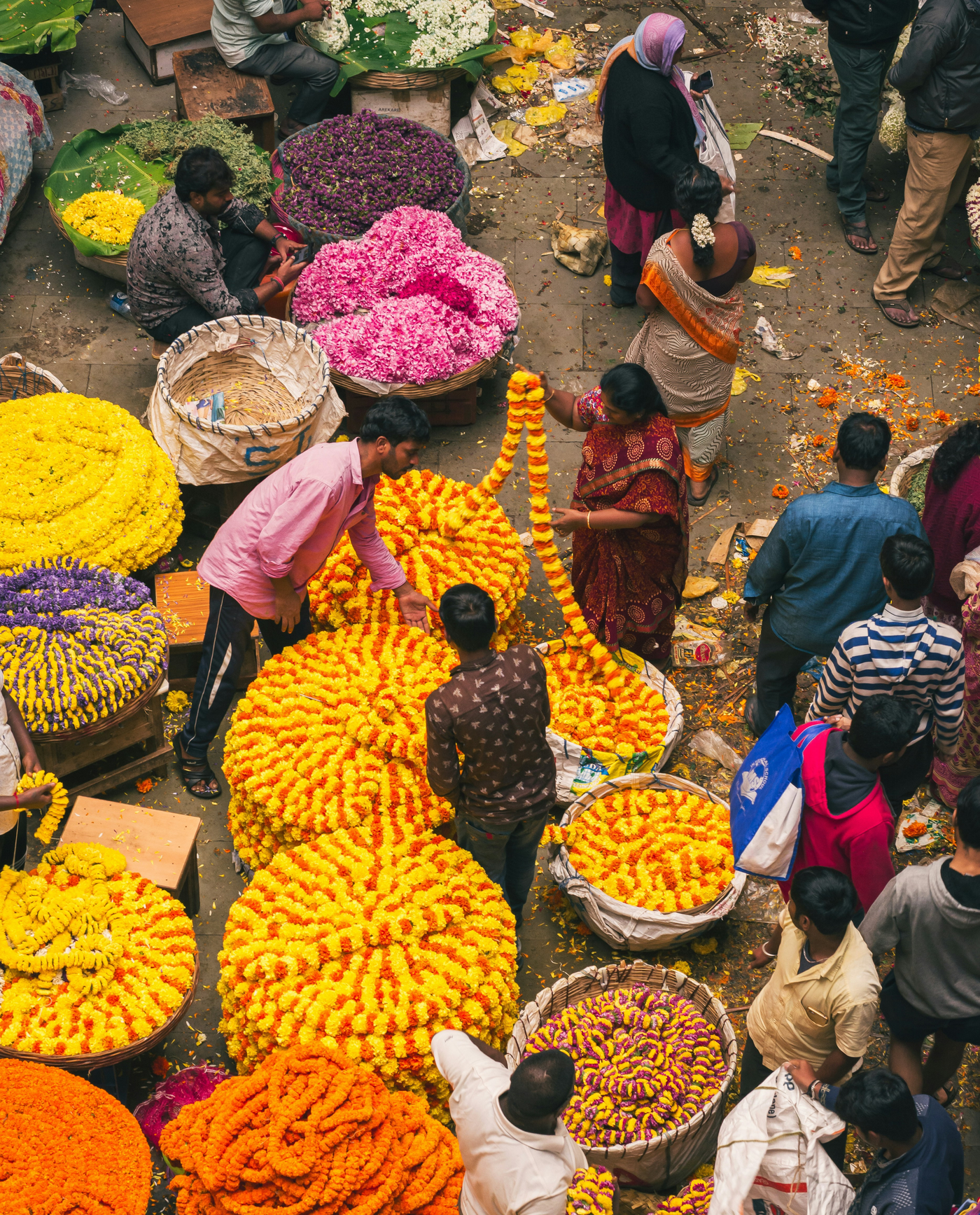
team across boarders
India
India is a place of innovation and exploration, where traditional craftsmanship meets continual development. Our weaving partners embrace the opportunity to experiment with different techniques, materials and constructions, from flatwoven and handloom rugs to intricate hand-knotted pieces. Bhadohi sits at the heart of India’s rug-making tradition, with generations of knowledge passed through its weaving communities. This rich heritage, combined with creativity and skill, keeps the craft evolving while preserving its artistry.
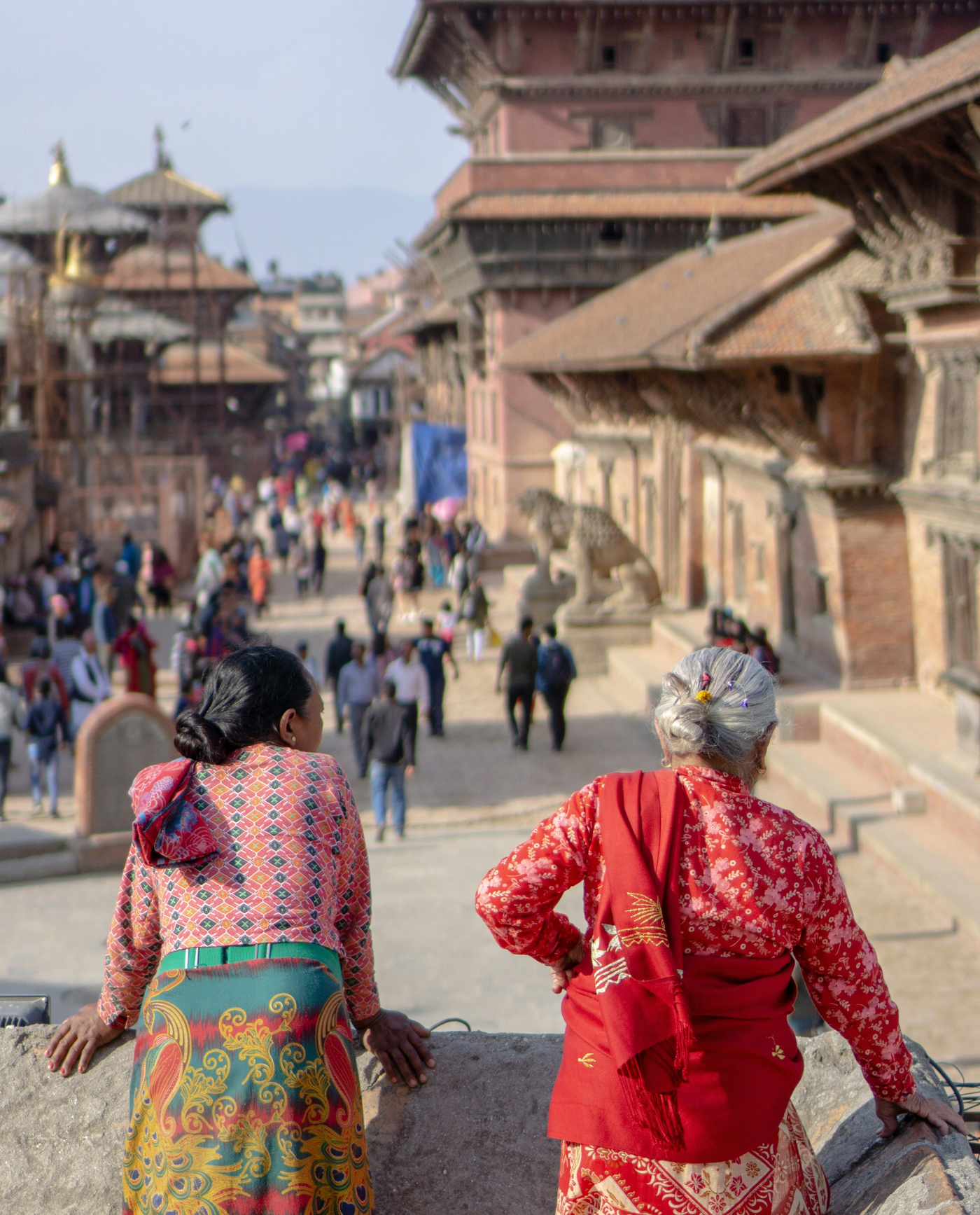
team across boarders
Nepal
Traditional Tibetan knotting developed in Tibet centuries ago and was carried to Nepal and India by Tibetan communities fleeing their homeland. The continuous knot-on-knot technique has since become central to Nepal’s rug-making heritage, with Kathmandu now a renowned centre for the craft. We are proud to support the skilled makers who continue this tradition, preserving generations of knowledge and craftsmanship through every rug.

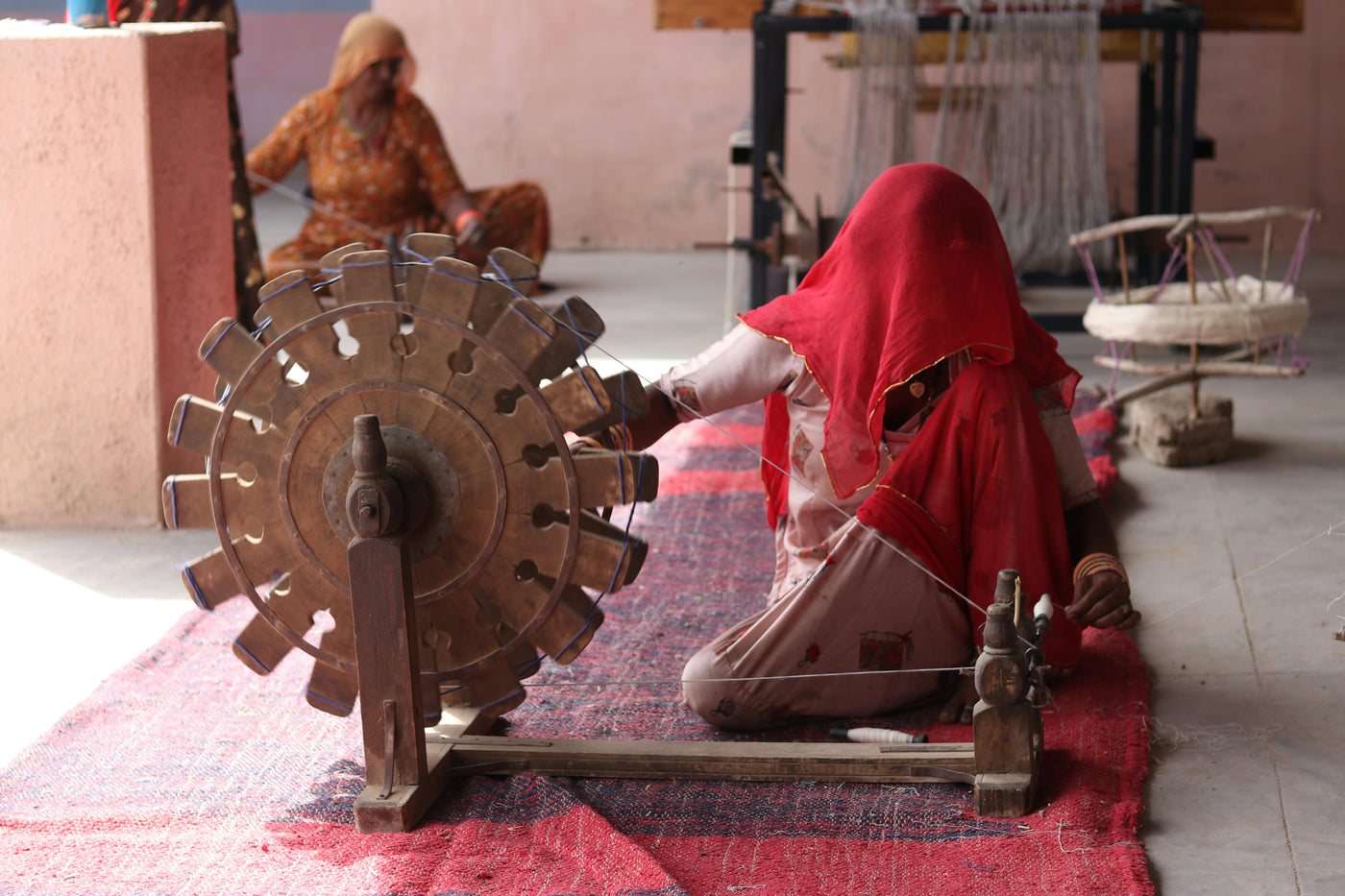
the making process
Spinning
We choose recycled and recyclable materials wherever possible, considering every element of how our rugs are made. Our looms are carefully dismantled and rebuilt to suit each rug’s dimensions, extending their working life and ensuring these essential tools remain part of the craft for years.
the making process
Dyeing
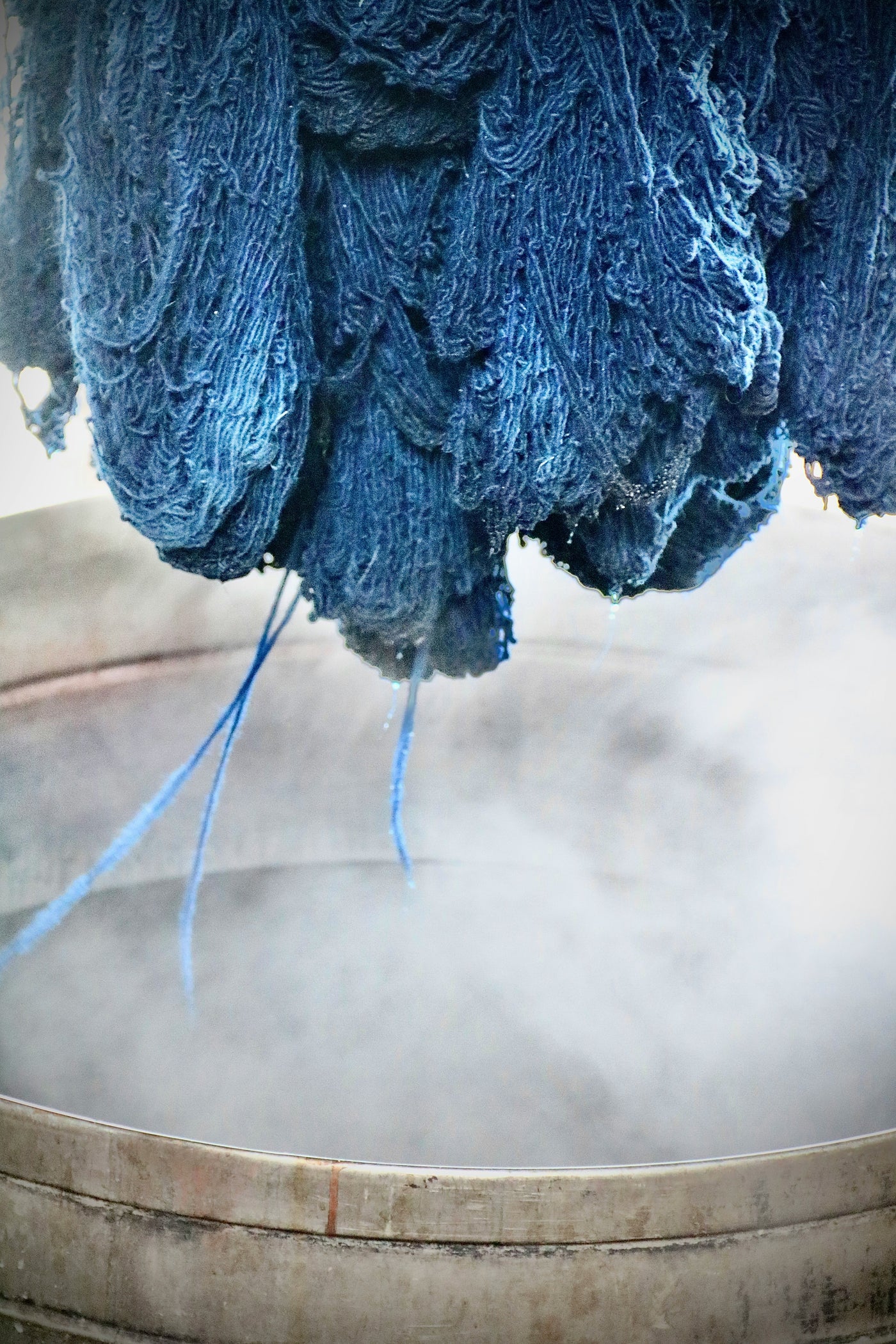
With over three thousand colours to choose from, each rug is dyed to order using a unique pigment formulation. Our Dye Master oversees every shade, drawing on a generations-old eye for colour to ensure complete accuracy and consistency.
the making process
Sunshine
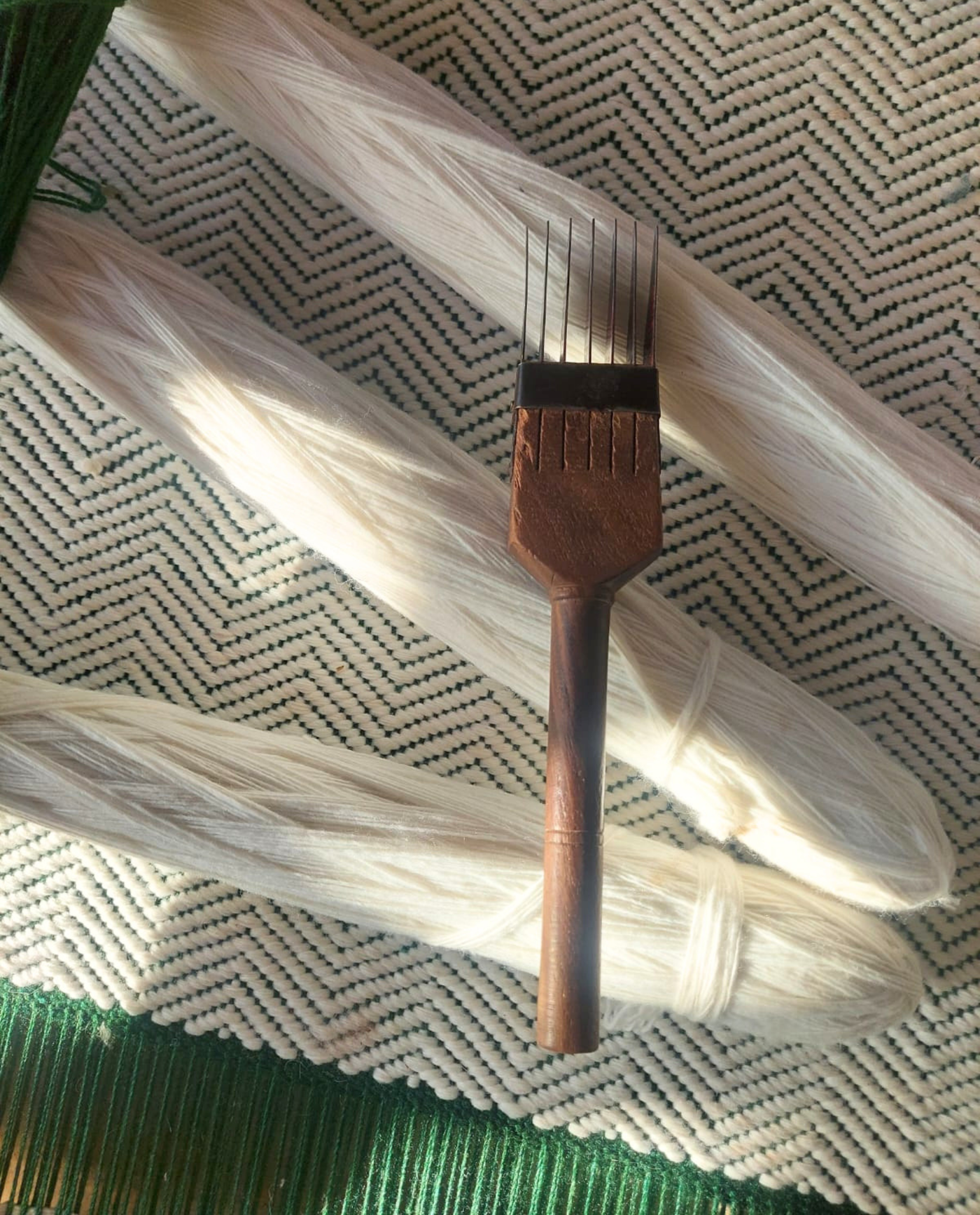
Each small batch of fibre is carefully dyed over a coal fire, with the yarn constantly rotated for an even finish. Once dyed, the yarn is sun-cured to enhance colourfastness, then twisted into braids and prepared for the hand-built loom
the making process
Materiality
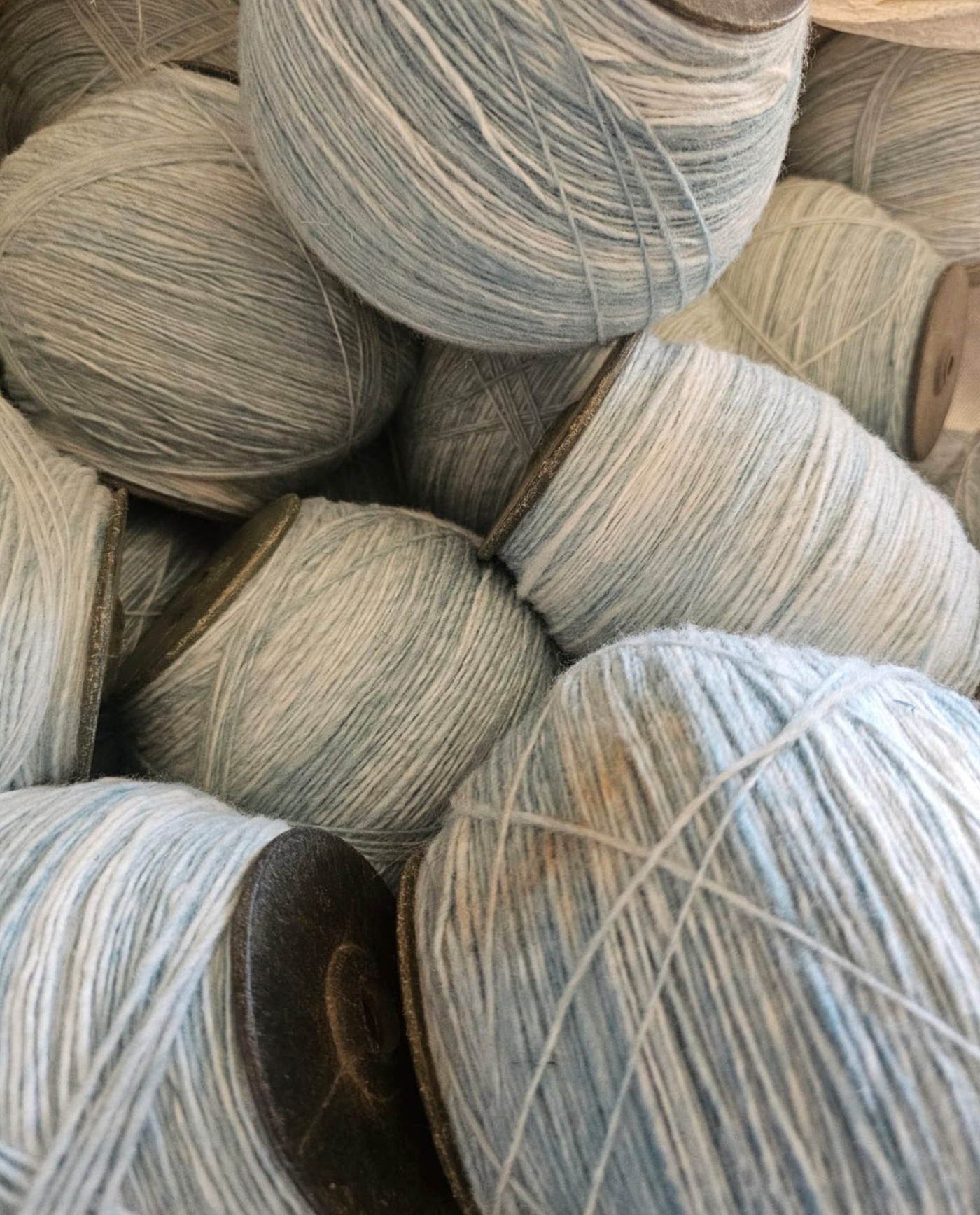
We use Himalayan and New Zealand wools, prized for their strength, softness and ability to absorb colour. Our semi-worsted process aligns longer fibres for a smoother finish, while our Performance technology mimic natural wool, jute, sisal and silk.
the making process
Washing
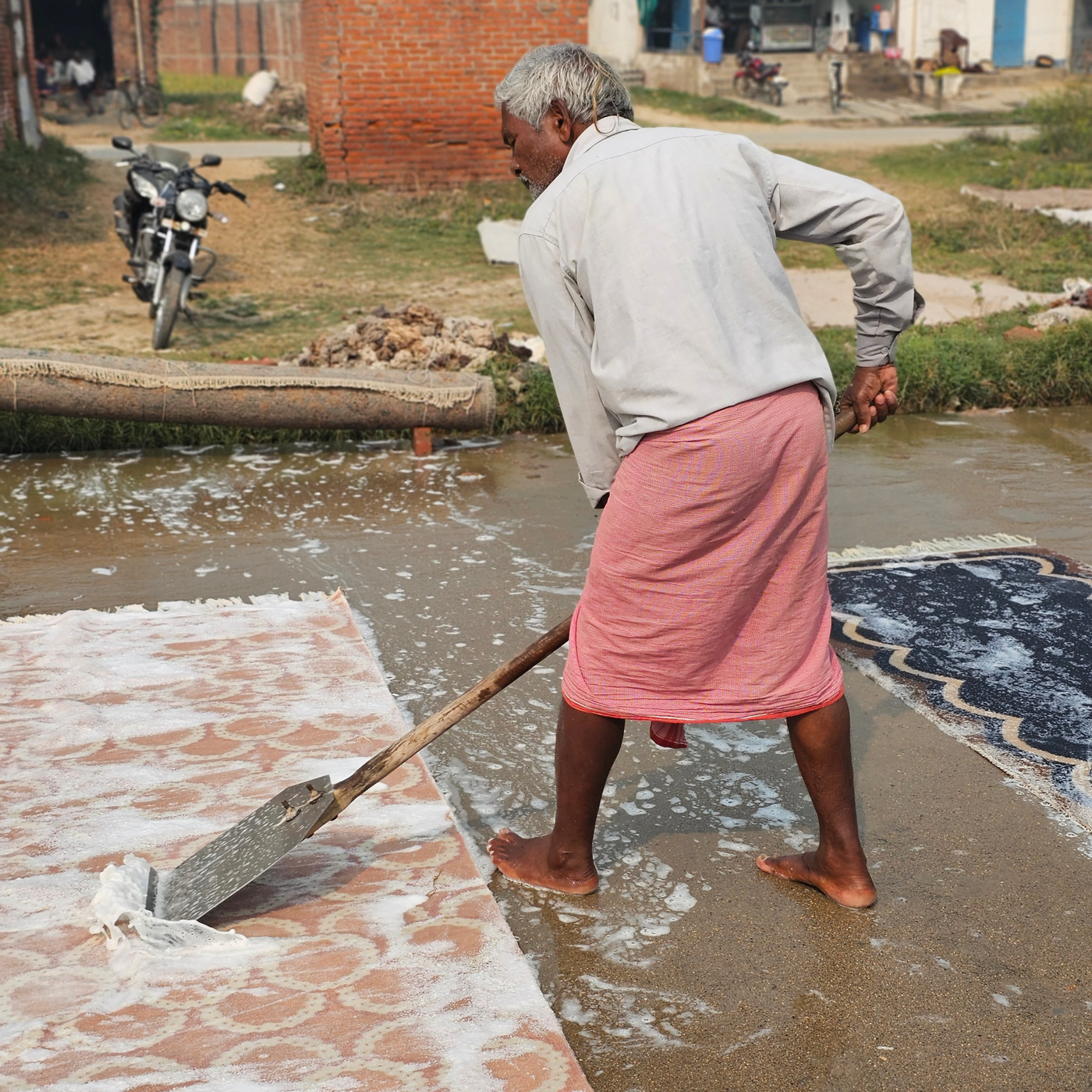
Each rug is washed two to three times to remove dust and gently open the pile, enhancing the softness of the wool. It is then paddled, stretched to precise dimensions and sun-dried, ready for finishing.
the making process
Finishing
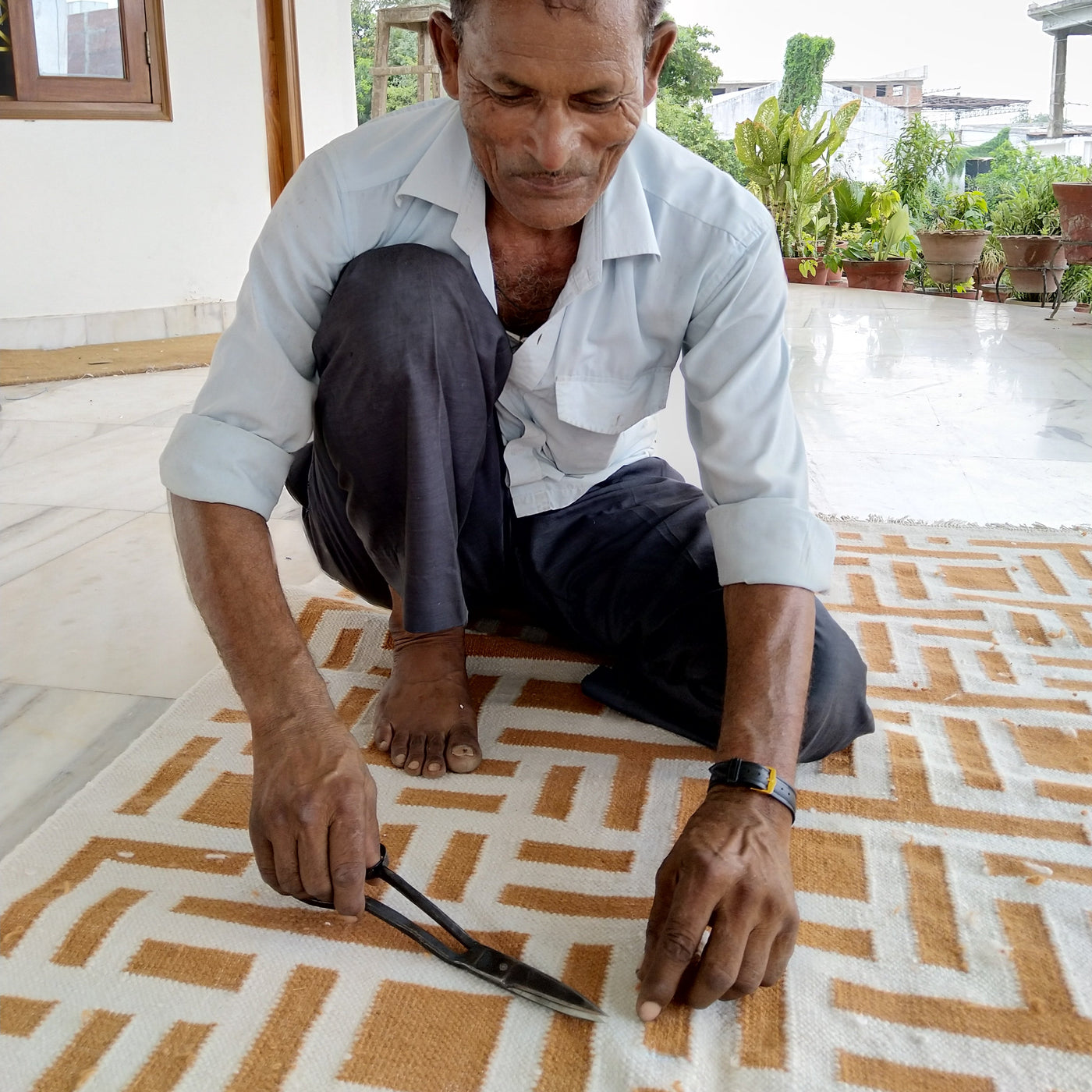
Finishing a rug requires skilled handwork. Each rug is bound by hand to secure the edges, while loose threads are trimmed from the surface. Hand-knotted designs are then subtly embossed, defining the pattern and completing the rug.

rug weaves explained
Hand-knotted
The history of knotted rugs in Nepal is a rich fabric in itself and we are proud to support and preserve this craft.
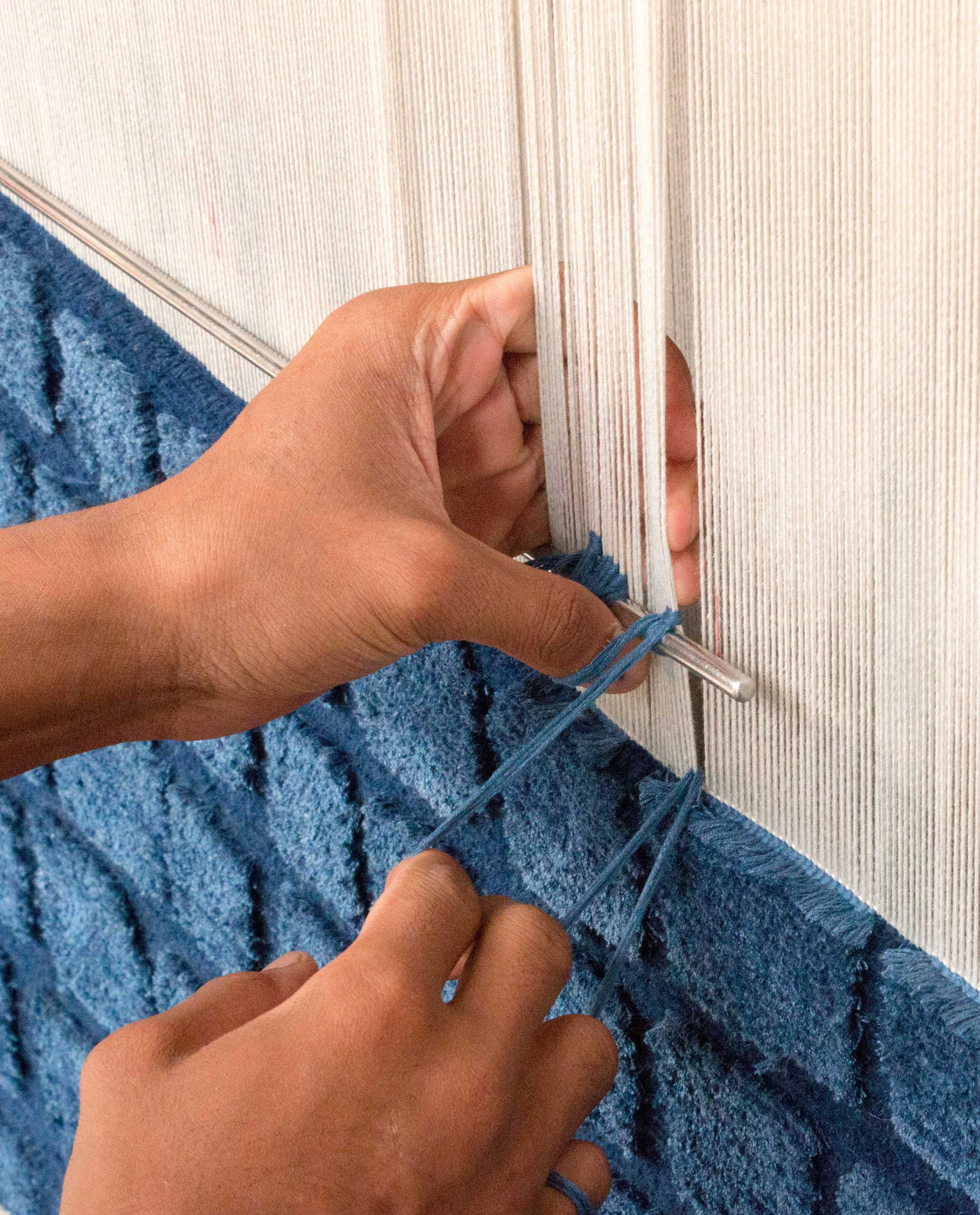
We most often use the Tibetan Knot style of hand-knotting for our luxurious, with-pile rugs (as oppose to flat kilim-like rugs). It is formed by simultaneously tying the yarn around both a horizontal metal rod and the cotton warp (which runs vertically). Every new knot is a continuation of the previous. The knots are then sliced on the rod to create a pile or left looped for added texture.
This style of knot is very well suited to contemporary design and allows for patterns to be easily adapted to different densities. The quality of a knotted rug is measured in knots per square inch and the minimum density required depends entirely on the complexity of the design.
Our weavers follow a life-size graph so that the pattern can be followed knot-by-knot. A remarkably intricate craft, it takes approximately 600 hours to complete the weaving of a 2m x 3m (6’7″ x 9’10”) rug made in 100-knots per square inch. The total knot-count of the same piece is just under 1 million.
rug weaves explained
Flatwoven
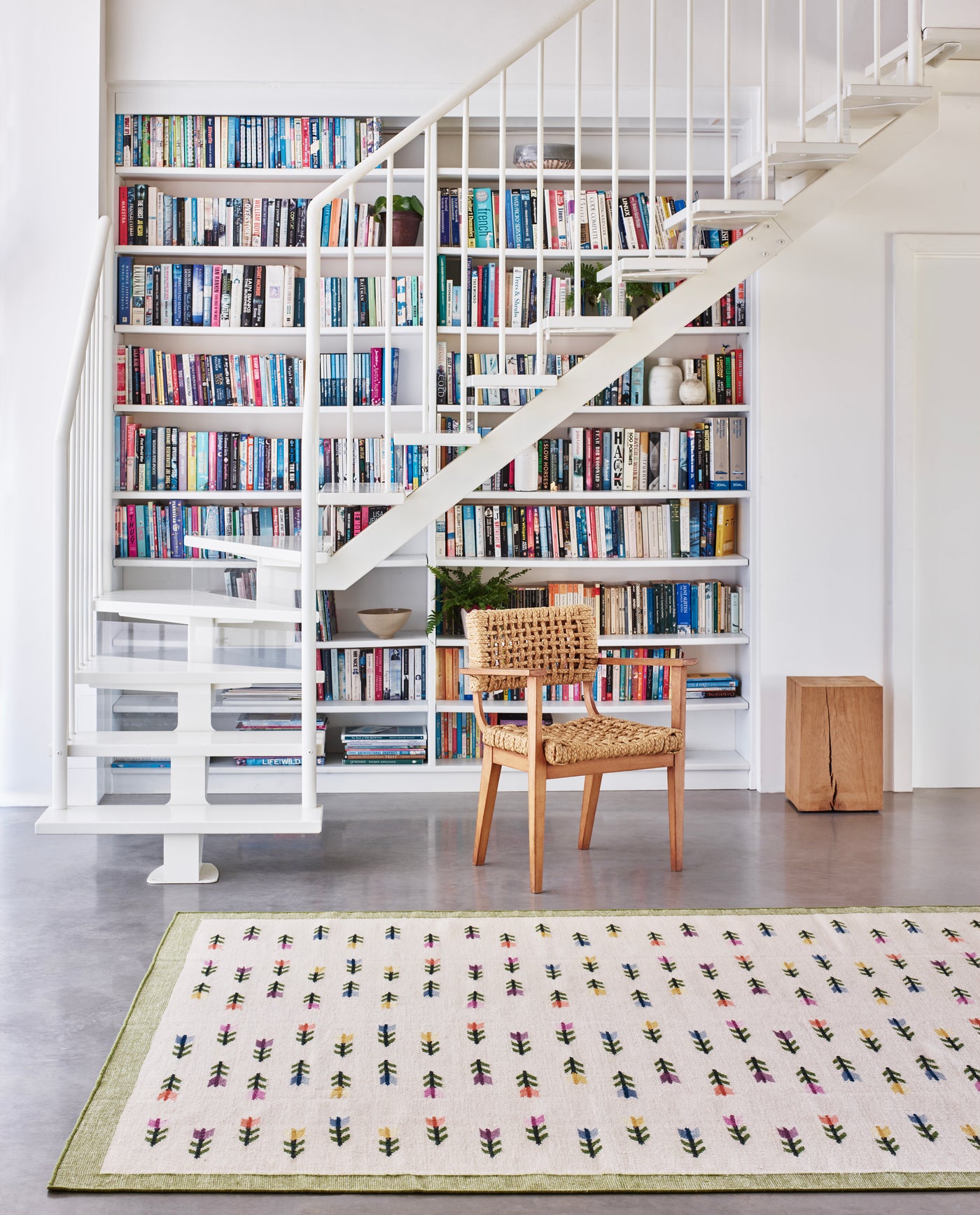
Epitomising casual elegance, the flatwoven rug is the perfect understated layer. Rooted in tradition, this style of rug was thought to originate around the fourth or fifth century and weavers have used the same ancient technique for centuries.
Crafted on a horizontal loom using the highest-grade New Zealand wool or sustainable /re/PURPOSE fibres, this style of rug is particularly suited to linear and geometric designs due to the grid-like construction of the weave. Because they are without-pile, flatwoven sit pretty on both carpet and hardwood flooring. As the pattern is identical on both the front and back, these rugs can also be reversed for longer use.
rug weaves explained
Handloom
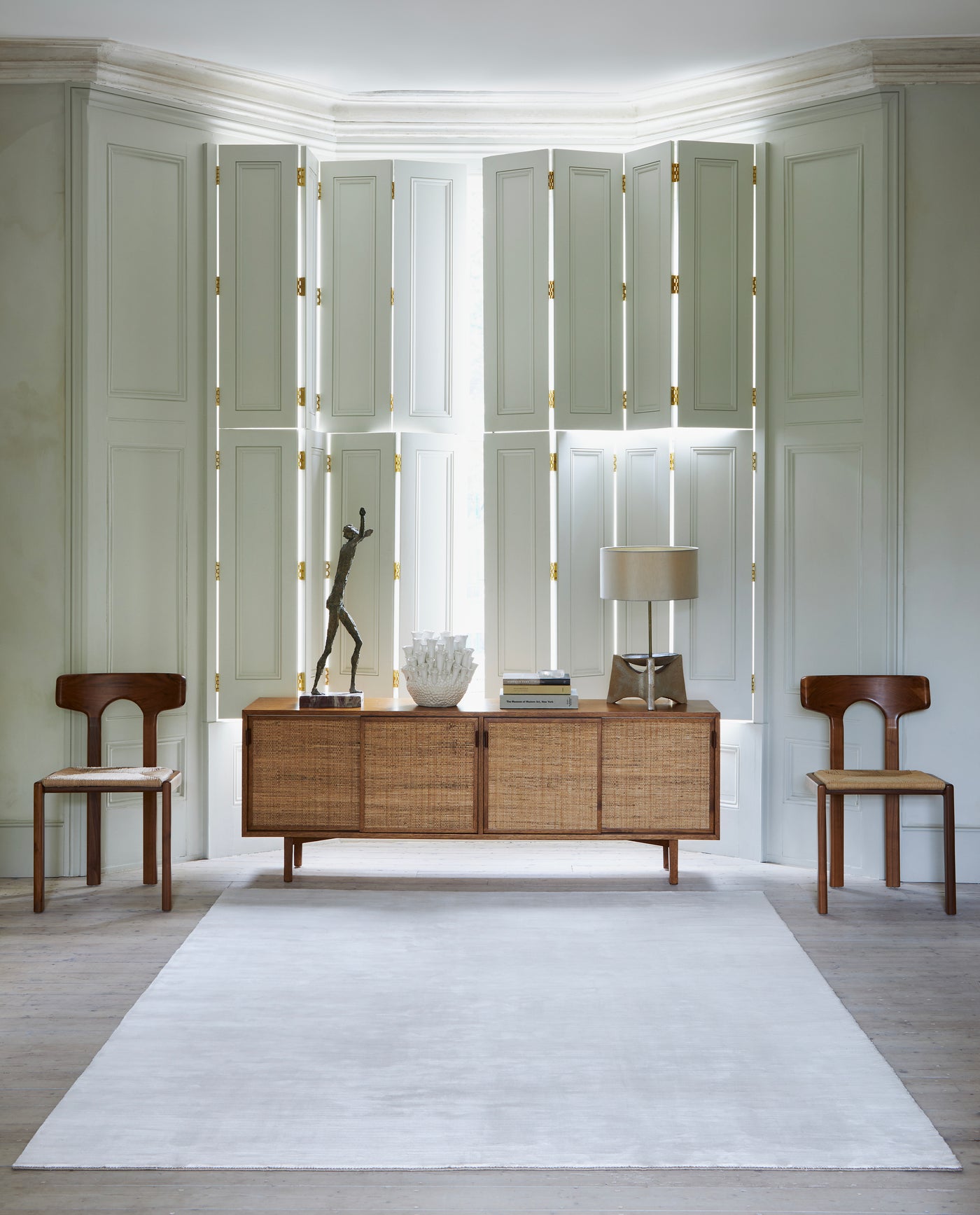
Ideal for shorter lead-times, our handloom rug styles give a knotted effect while being created on a loom, ensuring a high-quality piece that lasts for generations. These rugs possess a dense pile with a real sense of luxury. Rather than creating the rug knot-by-knot, it is crafted row-by-row (much like a fabric) on a loom which is operated with shuttles carrying the weft fibres between the warp, changing the warp with pedals operated by foot.
The use of the loom is a fairly swift production style but does require linear patterns and solid colours (which can have patterns embossed to the surface in the hand-finishing stages later). Solid rugs with borders, stripes and a combination of loop and cut pile are popular in this style of weaving.